5 Types of Red Chilli Powder Exported from India and Their B2B Applications
India has consistently positioned itself as one of the largest red chilli powder exporters, supplying to markets across Asia, the Middle East, Europe, and North America. The country’s strength lies not just in volume, but in variety, customisation consistency, and scalability.
For B2B buyers, this matters.
Because in commercial food production, the choice of chilli powder is not just about spice. It directly impacts:
- Product consistency
- Colour and visual appeal
- Cost efficiency
- Market acceptance
This brings us to the real question.
What are the Main Types of Red Chilli Powder Exported from India?
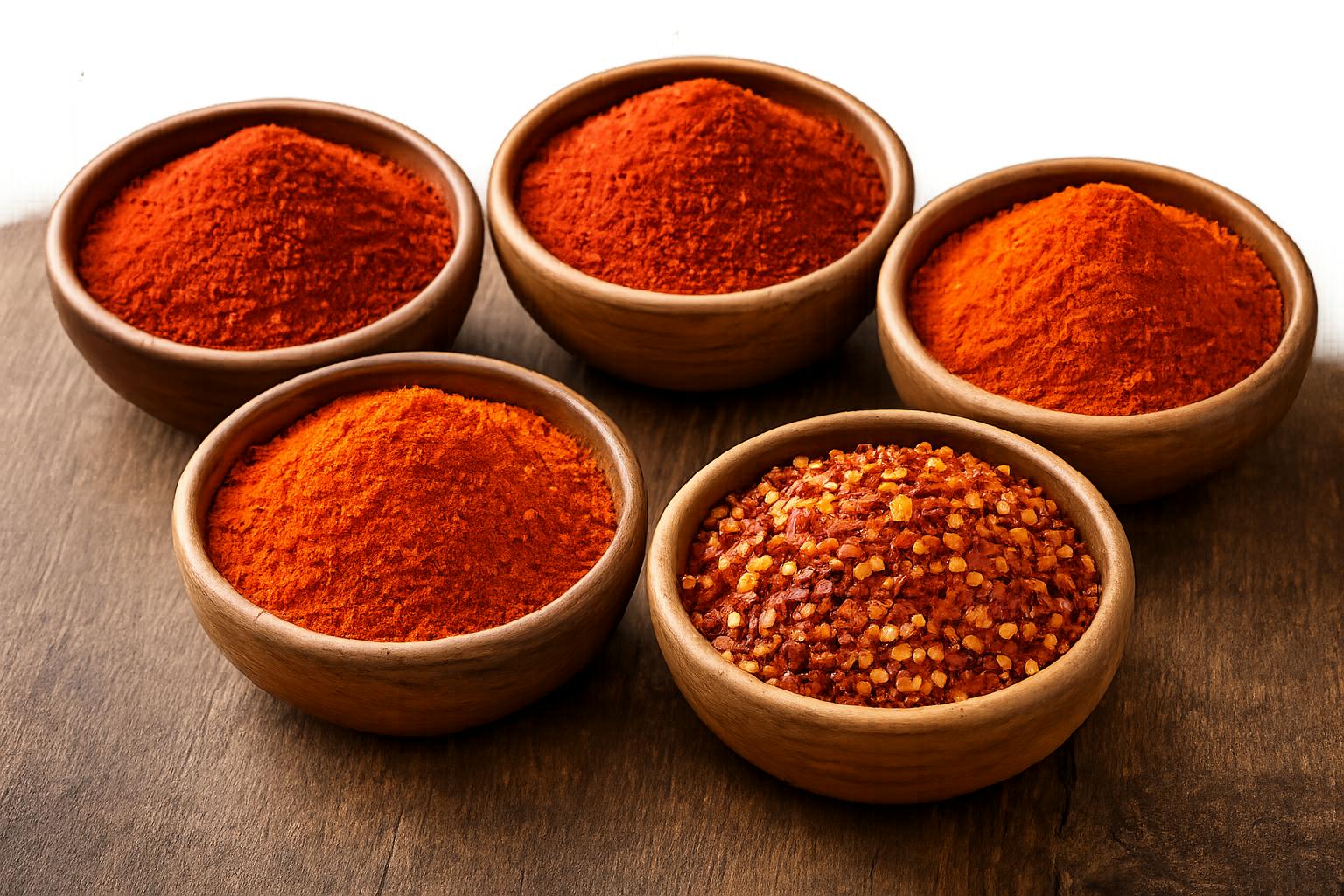
These are 5 common types of red chilli powder exported from India:
- Pure Kashmiri Chilli Powder
- Medium Spicy Chilli Powder
- Spicy Red Chilli Powder
- Chilli Flakes
- Custom Chilli Powder
Each serves a distinct purpose across industries such as FMCG, food processing, HoReCa, and private label manufacturing.
What is Pure Kashmiri Chilli Powder and Where is it Used in B2B Industries?
Pure Kashmiri chilli powder is known for its vibrant red colour and low pungency. It is widely used when visual appeal is more important than heat.
Where is it Used?
- Processed sauces, ketchups, and gravies
- Snack manufacturing for consistent colour coating
- Meat and seafood processing for export-grade presentation
- Mild spice blends for international retail markets
Why do Businesses Prefer It?
- Enhances product appearance without overpowering flavour
- Ensures uniform colour across large production batches
- Ideal for brands targeting a broader, less spice-tolerant audience
What is Medium Spicy Chilli Powder and Why is it Widely used in Food Manufacturing?
Medium spicy chilli powder offers a balanced combination of heat and colour, making it one of the most versatile categories in exports.
Where is it Used?
- Ready-to-eat and ready-to-cook food production
- HoReCa supply chains requiring standardised taste
- Spice blending for masalas and seasoning mixes
- Frozen food products that require flavour retention
Why do Businesses Prefer It?
- Works across multiple product categories
- Cost-effective for bulk manufacturing
- Helps maintain consistent taste profiles across batches
What is Spicy Red Chilli Powder and Where is High Pungency Required?
Spicy red chilli powder is defined by its high heat intensity, often used where strong flavour impact is essential.
Where is it Used?
- Instant food seasoning such as noodles and ready mixes
- Pickle and fermented food manufacturing
- Ethnic food brands catering to spice-forward markets
- Industrial catering and bulk food production
Why do Businesses Prefer it?
- Delivers strong flavour in smaller quantities
- Reduces overall spice consumption cost per batch
- Supports bold product positioning in competitive markets
What is Custom Chilli Powder and How do Exporters Tailor it for Businesses?
Custom chilli powder is where exporters move beyond standard offerings and create tailored blends based on business requirements.
This includes adjustments in:
- Heat level (Scoville scale)
- Colour intensity (ASTA value)
- Mesh size and texture
- Moisture content
- Regional taste preferences
Where is it Used?
- Private label brands requiring unique formulations
- FMCG companies scaling standardised production
- Export businesses targeting region-specific flavour profiles
- Spice and seasoning manufacturers
Why Do Businesses Prefer it?
- Complete control over product specifications
- Consistency across markets and production cycles
- Ability to differentiate in crowded categories
This is also where serious B2B buyers shift from generic sourcing to strategic sourcing.
There is another type of chilli powder, which technically is not in powder form, but pretty close i.e. chilli flakes.
What are Chilli Flakes and How are they Used in Commercial Food Production?
Chilli flakes are coarsely crushed dried chillies that provide both texture and visible spice cues.
Where are They Used?
- QSR chains as table condiments and add-ons
- Ready meal packaging as seasoning sachets
- Bakery and savoury snack production
- Premium and gourmet packaged food products
Why do Businesses Prefer them?
- Enhance product texture and visual appeal
- Easily recognisable across global markets
- Add perceived value to finished products
How do Red Chilli Powder Exporters Meet Diverse B2B Requirements?
Leading red chilli powder exporters do more than just supply. They act as production partners.
Key capabilities include:
- Sourcing from specific chilli varieties such as Guntur or Byadgi
- Precision grinding and blending techniques
- Quality testing for ASTA colour, heat levels, and moisture
- Flexible bulk packaging and private labelling
- Compliance with global food safety standards
For B2B buyers, this ensures predictability, compliance, and scalability.
How do Different Types of Chilli Powder Compare for B2B use?
Here is a quick comparison to help buyers make informed decisions:
Type | Heat Level | Colour | Best B2B Use Case |
Kashmiri | Low | High | Sauces, snacks, visual appeal |
Medium | Medium | Medium | RTE foods, spice blends |
Spicy | High | Low-Medium | Instant foods, pickles |
Flakes | Variable | Medium | QSR, seasoning |
Custom | Customisable | Customisable | Private label, FMCG |
Best Chilli Powder Exporters and Manufacturers in India
If you are looking for a red chilli powder exporter in India, you should contact VLC Spices. We manufacture and export high quality chillies in multiple countries. Here’s what makes us stand out:
- Direct Sourcing Advantage: We work closely with trusted farmers to source high-quality raw chillies, ensuring better control over quality right from the origin.
- Precision Processing: Our processes include fumigation, sterilisation, and hygienic grinding techniques that help preserve natural oils, flavour, and consistency.
- Custom Heat & Colour Profiles: We tailor chilli powder specifications based on your exact requirements, whether it is heating intensity, colour value, or texture.
- Consistent Batch Quality: Every batch is standardised to maintain uniform colour, taste, and texture, ensuring reliability across production cycles.
- Flexible Packaging Solutions: We offer packaging options ranging from bulk 25 kg HD poly bags to customised private-label retail packs, depending on your business needs.
Also Read: How Chilli Powder Suppliers Balance Pungency, Colour, and Shelf Stability
Final Thoughts
The global demand for Indian red chilli powder continues to grow, but what truly drives successful sourcing is choosing the right type for the right application.
From colour-rich Kashmiri variants to high-impact spicy powders and fully customised blends, each category plays a specific role in B2B food production.
For businesses, the shift is clear. It is no longer about sourcing chilli powder.
It is about sourcing the right formulation from the right red chilli powder supplier.
Along with red chilli powder, you can also check VLC Spices’ fennel seeds, cloves, turmeric powder, cumin seeds, coriander powder, and more.
Frequently asked questions
Which type of red chilli powder is best for food manufacturing?
Medium spicy chilli powder is widely used in food manufacturing due to its balanced heat and colour, making it suitable for a variety of products.
What is the difference between Kashmiri chilli powder and regular chilli powder?
Kashmiri chilli powder has low pungency and high colour value, while regular chilli powder typically has higher heat and moderate colour.
What is custom chilli powder in B2B exports?
Custom chilli powder is a tailored blend designed to meet specific business needs such as heat level, colour, texture, and regional taste preferences.
Which chilli powder is used for colour in processed foods?
Pure Kashmiri chilli powder is commonly used to enhance colour without significantly increasing spiciness.
Why do exporters offer different types of chilli powder?
Different industries require specific combinations of heat, colour, and texture. Wholesale red chilli powder manufacturers and exporters provide multiple types to meet these varied requirements.